
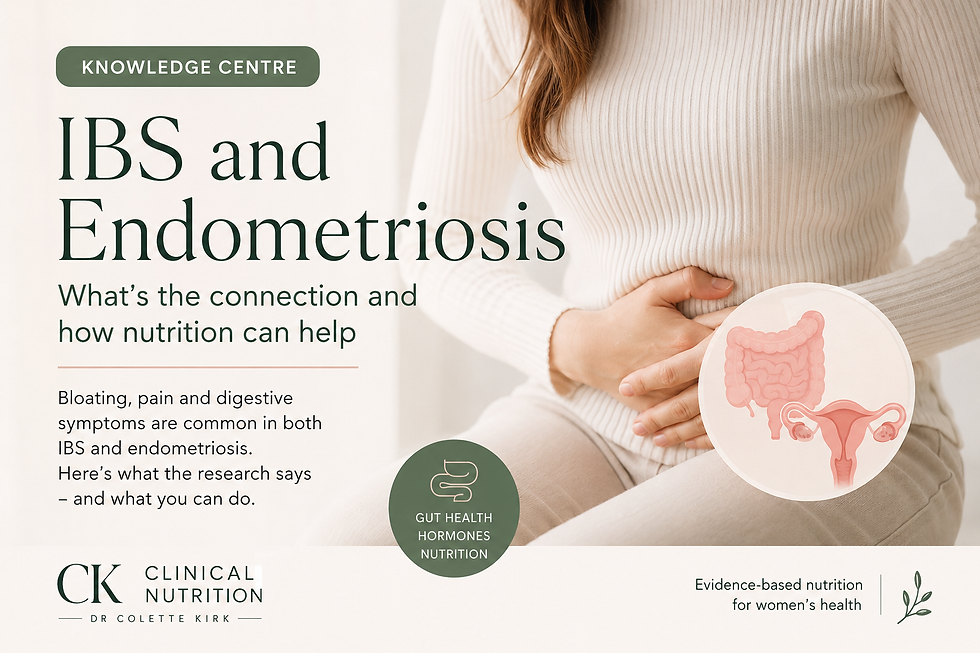
IBS and Endometriosis: Why Are They Often Linked?

Updated: Aug 12
If you live with endometriosis and experience bloating, abdominal pain, constipation or diarrhoea, you're not alone.
Many people assume these symptoms are simply part of living with endometriosis. However, research suggests that another condition may also be contributing.
Studies consistently show that people with endometriosis are significantly more likely to have irritable bowel syndrome (IBS) than those without endometriosis. Understanding this overlap is important because recognising IBS alongside endometriosis may open the door to effective, evidence-based strategies to help manage digestive symptoms and improve quality of life.
What is endometriosis?
Endometriosis is a chronic condition where tissue similar to the lining of the uterus grows outside the womb. These deposits are most commonly found within the pelvis but can also affect areas such as the ovaries, fallopian tubes, bowel and bladder.
Common symptoms include:
Pelvic pain
Painful periods
Pain during or after sex
Difficulty becoming pregnant
Fatigue
Digestive symptoms including bloating, abdominal pain and changes in bowel habits
Because endometriosis can affect structures close to the bowel, digestive symptoms are common. However, they are not always caused by endometriosis itself.
What is IBS?
Irritable bowel syndrome (IBS) is a common disorder affecting the digestive system.
Unlike conditions such as inflammatory bowel disease (IBD) or coeliac disease, IBS does not cause damage to the bowel. Instead, it affects how the gut functions and how the brain and gut communicate.
Common symptoms include:
Abdominal pain
Bloating
Excess wind
Constipation
Diarrhoea
A combination of constipation and diarrhoea
Symptoms often fluctuate over time and vary considerably between individuals.
How common is IBS in people with endometriosis?
This is where the evidence becomes particularly interesting.
A large systematic review and meta-analysis examined 17 studies involving more than 96,000 participants to investigate the relationship between endometriosis and IBS.
The researchers found that:
People with endometriosis were around three times more likely to have IBS than those without endometriosis.
Approximately 23% of women with endometriosis also had IBS, meaning almost one in four were living with both conditions.
While individual studies reported different rates, the overall message was remarkably consistent: IBS and endometriosis commonly occur together.
Why are IBS and endometriosis linked?
Researchers don't yet know exactly why these conditions overlap, and there is unlikely to be a single explanation.
Instead, several biological mechanisms are thought to contribute.
1. Increased sensitivity to pain
One of the strongest theories involves something called visceral hypersensitivity.
People with IBS often have a digestive system that is more sensitive to normal stretching and movement within the bowel. Similarly, people with endometriosis may develop increased sensitivity within the pelvis due to ongoing pain and inflammation.
This means that sensations that might not normally be painful can become uncomfortable or painful.
2. Shared pain pathways
The bowel and pelvic organs share many of the same nerves.
Persistent pelvic pain caused by endometriosis may influence how the nervous system processes pain, potentially contributing to digestive symptoms even when there is no bowel damage.
Researchers believe this shared nervous system involvement may help explain why pelvic pain and IBS frequently occur together.
3. Inflammation
Endometriosis is recognised as a chronic inflammatory condition.
Inflammation plays an important role in the development of endometriosis, and researchers are investigating whether inflammatory changes may also influence bowel function and contribute to IBS symptoms.
Although inflammation is a promising area of research, the exact relationship remains unclear and further studies are needed.
4. Hormonal influences
Many people notice that their digestive symptoms become worse around their period.
Hormonal changes throughout the menstrual cycle may affect both bowel function and pain sensitivity, potentially contributing to symptom flare-ups in people living with endometriosis and IBS.
However, hormones alone are unlikely to explain the entire relationship between the two conditions.
Are digestive symptoms always caused by endometriosis?
No. This is perhaps the most important message.
Although endometriosis can cause bowel symptoms, not every digestive symptom is caused by endometriosis itself.
IBS may exist alongside endometriosis, meaning both conditions contribute to symptoms.
This distinction matters because the management of IBS is often different from the management of endometriosis.
Recognising IBS may help explain symptoms such as:
Persistent bloating
Abdominal pain
Diarrhoea
Constipation
Symptoms that fluctuate with stress or certain foods
Rather than assuming every digestive symptom is "just part of endometriosis", it's important that ongoing symptoms are properly assessed.
Can diet help?
Diet can play an important role in managing IBS symptoms, but there isn't one eating plan that works for everyone.
The right approach depends on:
Your symptoms
Your medical history
Whether IBS is contributing to your digestive symptoms
Your nutritional needs
While some people may benefit from approaches such as the low FODMAP diet, this is not appropriate for everyone and should ideally be undertaken with guidance from a registered dietitian.
The goal should always be to improve symptoms while maintaining a varied, balanced and enjoyable diet.
When should you seek medical advice?
Speak to your GP or healthcare professional if you experience:
Persistent abdominal pain
Ongoing bloating
Changes in your bowel habits
Symptoms affecting your quality of life
New or worsening digestive symptoms
Although IBS is common, digestive symptoms should not automatically be attributed to either IBS or endometriosis without appropriate assessment.
Key takeaways
People with endometriosis are around three times more likely to have IBS than those without endometriosis.
Around one in four women with endometriosis also have IBS.
Researchers believe the overlap may involve shared pain pathways, increased sensitivity of the gut, hormonal influences and inflammation.
Not every digestive symptom in someone with endometriosis is caused by endometriosis itself.
Recognising IBS alongside endometriosis may help you access evidence-based strategies to improve your symptoms and quality of life.
How CK Clinical Nutrition can help
Living with both endometriosis and IBS can feel frustrating, particularly when symptoms overlap and it's difficult to know what's causing them.
As an HCPC Registered Dietitian, Lead Specialist NHS Dietitian and Clinical Nutrition Researcher, I provide evidence-based nutrition support for people living with digestive conditions, including IBS. Rather than relying on restrictive diets or one-size-fits-all advice, consultations focus on understanding your symptoms, improving confidence around food and developing a personalised plan that supports both your digestive health and quality of life.
If you're struggling with ongoing digestive symptoms, you don't have to work through them alone. Book a consultation to receive personalised, evidence-based nutrition support.
References
Maroun P, Bitar L, Al Obaidi S, et al. Association between endometriosis and irritable bowel syndrome: A systematic review and meta-analysis. Frontiers in Medicine. 2022.
Comments