
Can You Increase GLP-1 Naturally With Food? What the Evidence Really Says

By Dr Colette Kirk PhD, HCPC Registered Dietitian | Lead Specialist NHS Dietitian | Clinical Nutrition Researcher
Can you increase GLP-1 naturally?
Yes - but probably not in the way social media suggests.
If you've spent any time online recently, you've probably seen posts claiming that certain foods can "boost GLP-1 naturally" or even work like medications such as Mounjaro® or Wegovy®.
It's easy to see why these claims have attracted so much attention.
GLP-1 medications have transformed obesity treatment for many people, naturally leading to questions about whether food can produce the same effects.
The truth is a little more nuanced.
Your body does naturally release GLP-1 every time you eat, and the foods you choose can influence that normal physiological response.
However, the effects of food are very different from those of GLP-1 medications.
Understanding that difference is important because it helps you make informed decisions rather than chasing the latest nutrition trend.
In this article, I'll explain what GLP-1 is, how your body naturally produces it, which foods appear to stimulate its release and what this means in practice, whether you're taking a GLP-1 medication or simply interested in improving your health.
At a Glance
✔ Your body naturally releases GLP-1 after eating.
✔ Meals containing protein and fibre appear to stimulate this natural response.
✔ There is no single food that works like GLP-1 medication.
✔ A balanced eating pattern matters far more than any individual "GLP-1 food."
What is GLP-1?
GLP-1, short for glucagon-like peptide-1, is a hormone naturally produced by specialised cells in your small intestine after you eat.
Although most people had never heard of GLP-1 until recently, it has always played an important role in helping your body regulate appetite and blood glucose.
After eating, GLP-1 helps to:
Increase feelings of fullness.
Slow the rate at which food leaves your stomach.
Stimulate insulin release when blood glucose rises.
Reduce glucagon release from the pancreas.
Help regulate appetite after meals.
These are all normal physiological processes that happen every day.
GLP-1 medications, including Mounjaro® and Wegovy®, have been developed to act on these same pathways, which is one of the reasons they can be so effective for weight management.
However, it's important to remember that your body naturally produces GLP-1 long before any medication is involved.
Can Food Stimulate Your Body's Natural GLP-1 Response?
The short answer is yes.
Every time you eat, your digestive system responds by releasing hormones, including GLP-1. This isn't something that only happens when you eat a particular "superfood" or take a supplement. It's a completely normal response to eating.
Research suggests that the amount of GLP-1 released varies depending on the nutrients within a meal. Meals containing a combination of protein, fibre and healthy fats appear to stimulate a greater GLP-1 response than meals based predominantly on refined carbohydrates.
However, it's important not to overstate what this means. The natural rise in GLP-1 after eating is relatively modest and short-lived.
It is not comparable to the effects of GLP-1 medications, which have been specifically developed to produce a much greater and longer-lasting effect on the GLP-1 receptor.
This is where many social media posts become misleading. Rather than asking: "Which food boosts GLP-1 the most?" a more helpful question is: "How can I build meals that support my body's natural appetite regulation while also providing good nutrition?"
That's where the evidence becomes much more useful.
Which Foods May Help Support Your Body's Natural GLP-1 Response?
If you're hoping there's one food that dramatically increases GLP-1, you'll probably be disappointed.
The evidence doesn't support the idea of a single "GLP-1 superfood". Instead, research suggests it's the overall composition of a meal that influences your body's natural GLP-1 response.
Meals containing protein, fibre and healthy fats appear to stimulate a greater release of GLP-1 than meals made up mainly of refined carbohydrates. Rather than searching for one ingredient, it's much more helpful to think about building balanced meals.
1. Include a Source of Protein
Protein is one of the nutrients that appears to stimulate GLP-1 release after eating.
It also plays many other important roles, including helping to maintain muscle mass, supporting immune function and contributing to feelings of fullness.
Examples of protein-rich foods include:
Eggs
Greek yoghurt or skyr
Cottage cheese
Chicken and turkey
Fish
Lean meat
Tofu and tempeh
Beans, lentils and chickpeas
Milk and fortified soya alternatives
Rather than aiming for large portions, try including a source of protein each time you eat. For many people, this is a more realistic and sustainable approach than making dramatic changes overnight.
2. Eat Plenty of Fibre-Rich Foods
Fibre is well known for supporting digestive health, but it may also influence appetite regulation.
Some types of fibre are fermented by bacteria living in the large intestine, producing compounds called short-chain fatty acids. These compounds are thought to play a role in stimulating the release of GLP-1.
Fibre-rich foods include:
Oats
Wholegrain bread
Brown rice
Lentils
Chickpeas
Beans
Fruit
Vegetables
Nuts and seeds
If your current fibre intake is quite low, increase it gradually and make sure you're drinking enough fluid, particularly if you have digestive symptoms.
3. Don't Forget Healthy Fats
Healthy fats don't "boost" GLP-1 on their own, but including them as part of a balanced meal may contribute to fullness and help create satisfying meals.
Examples include:
Extra virgin olive oil
Avocados
Walnuts
Almonds
Chia seeds
Flaxseeds
Oily fish such as salmon, mackerel and sardines
Like all foods, it's the overall balance of your diet that matters most.
It's About the Whole Meal, Not One Ingredient
One of the biggest misconceptions on social media is that there's a particular food that works like a natural version of GLP-1 medication.
Current evidence simply doesn't support that. Instead, I'd encourage you to think about the overall pattern of your meals rather than individual ingredients.
For example:
🥣 Breakfast
Greek yoghurt with oats, berries and a sprinkle of chopped nuts.
🥗 Lunch
A wholegrain wrap filled with chicken, salad and hummus.
🐟 Dinner
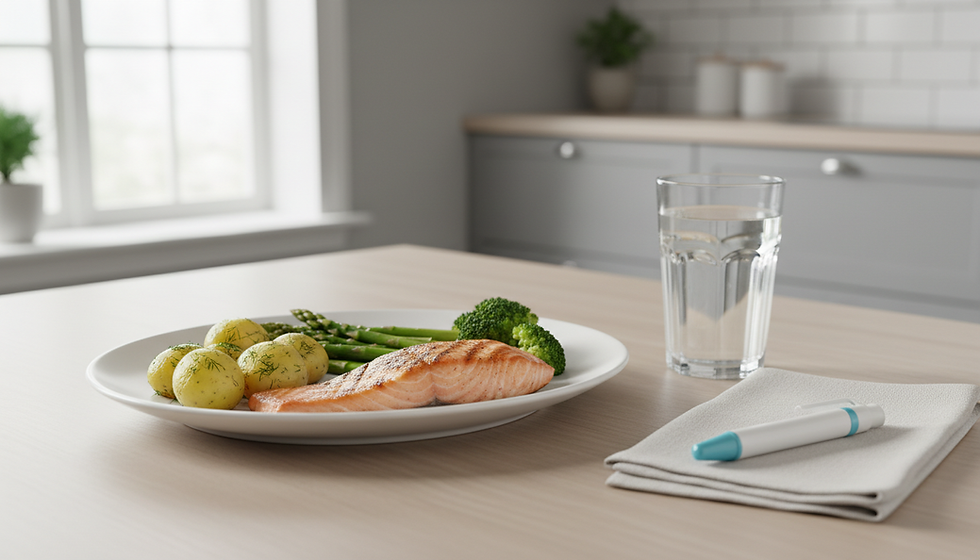
Grilled salmon with new potatoes and a variety of vegetables.
These meals aren't special because they "boost GLP-1". They're simply balanced meals that provide protein, fibre and healthy fats while supporting your overall nutritional health.
That's a much more useful way to think about eating than chasing the latest nutrition trend.
Can Food Replace GLP-1 Medication?
This is probably the most important question to answer.
The simple answer is no.
Although your body naturally releases GLP-1 after eating, the amount released is relatively small and the effect only lasts for a short period.
GLP-1 medications, such as Wegovy® (semaglutide) and Mounjaro® (tirzepatide), have been specifically developed to activate these pathways in a much stronger and longer-lasting way.
This is why medications can have a much greater effect on appetite, food intake and weight loss than food alone. That doesn't mean food isn't important.
In fact, I'd argue the opposite. Rather than thinking about food and medication as competitors, it's more helpful to think of them as partners.
Medication may help regulate appetite, but nutrition provides the protein, vitamins, minerals, fibre and energy your body still needs to stay healthy. Good nutrition remains the foundation of good health, whether you're taking GLP-1 medication or not.
What About Supplements That Claim to "Boost GLP-1"?
With the growing popularity of GLP-1 medications has come an increasing number of supplements claiming to "boost GLP-1 naturally".
You may have seen products marketed as:
Natural Ozempic®
GLP-1 boosters
Appetite support supplements
While these claims can sound appealing, it's important to approach them with caution.
At present, there is very little high-quality evidence that over-the-counter supplements produce effects comparable to GLP-1 medications.
Some ingredients have been studied in laboratory or small human studies, but this is very different from having strong evidence that a supplement meaningfully improves health outcomes or weight management.
If something promises results that sound too good to be true, it's worth asking whether those claims are supported by high-quality clinical research.
For most people, investing in a balanced eating pattern is likely to be far more beneficial than spending money on supplements with uncertain benefits.
If You're Taking Mounjaro® or Wegovy®
One question I'm often asked is whether people taking GLP-1 medication should also try to eat foods that naturally stimulate GLP-1.
In reality, that's probably not where your focus needs to be. Instead, I'd encourage you to concentrate on the nutritional basics.
That includes:
Eating enough protein to help preserve muscle mass during weight loss.
Including fibre-rich foods to support digestive health.
Drinking enough fluid, particularly if you're experiencing constipation.
Eating a varied diet to help meet your vitamin and mineral requirements.
Many people notice that their appetite becomes much lower while taking GLP-1 medication.
When you're eating less overall, the nutritional quality of the food you do eat becomes even more important. This is one of the reasons why personalised nutrition advice can be so valuable during treatment.
Key Take-Home Messages
If you only remember a few things from this article, let them be these:
✔ Your body naturally releases GLP-1 every time you eat.
✔ Meals containing protein, fibre and healthy fats appear to support this natural response.
✔ No single food has been shown to produce the same effects as GLP-1 medications.
✔ Be cautious of supplements or social media posts claiming to offer a "natural Ozempic".
✔ Rather than searching for one "GLP-1 food", focus on building balanced, nourishing meals.
Frequently Asked Questions
Can I increase GLP-1 naturally?
Yes. Your body naturally releases GLP-1 after eating, but this response is much smaller and shorter-lasting than the effects of GLP-1 medication.
Which foods increase GLP-1 the most?
There isn't one specific food that dramatically increases GLP-1.
Current evidence suggests that balanced meals containing protein, fibre and healthy fats are more helpful than focusing on individual foods.
Does protein increase GLP-1?
Protein appears to stimulate GLP-1 release after eating and can also help support fullness and preserve muscle mass.
Including a source of protein at meals is a sensible strategy for most people.
Does fibre increase GLP-1?
Some types of fibre are thought to support GLP-1 release through the production of short-chain fatty acids in the large intestine.
Fibre also supports digestive health and can contribute to fullness after meals.
Can oats increase GLP-1?
Oats contain beta-glucan, a type of soluble fibre that can form part of a healthy eating pattern.
Rather than focusing on oats alone, think about building balanced meals that include a variety of fibre-rich foods.
Can food replace Mounjaro® or Wegovy®?
No.
Although your body naturally releases GLP-1 after eating, food does not produce the same effect as GLP-1 medications.
Good nutrition remains important, but it should not be viewed as a replacement for prescribed treatment.
Are "natural GLP-1 supplements" worth buying?
At present, there is very little high-quality evidence that over-the-counter supplements produce effects comparable to GLP-1 medications.
Be cautious of products making exaggerated claims and remember that a balanced eating pattern is likely to have far greater health benefits.
👩🏻⚕️ Dr Colette Kirk's Clinical Perspective
One of the biggest changes I've seen over the past few years is the way social media has shifted the conversation from healthy eating to searching for the next nutritional shortcut.
Today it's foods that "boost GLP-1". Tomorrow it will be something else. In reality, nutrition rarely works that way.
Whether you're taking a GLP-1 medication or simply looking after your health, the principles remain remarkably consistent: eat a balanced diet, include protein and fibre regularly, and build habits you can realistically maintain. Those habits are far more powerful than chasing the latest trend.
Looking for Personalised Nutrition Support?
General nutrition advice is a useful starting point, but everyone's health, medical history and goals are different.
If you're taking Mounjaro®, Wegovy® or another GLP-1 medication and would like personalised nutrition advice, I offer online consultations across the UK.
Whether you're preparing to start treatment, managing side effects or planning for life after GLP-1 medication, I'd be delighted to help.
Or explore the rest of the GLP-1 Knowledge Centre for more evidence-based articles and practical nutrition advice.
You may also find these helpful
→ What Should I Eat on Mounjaro® If I Don't Feel Hungry?
→ Oral Semaglutide: What the Latest Research Means
→ Protein on GLP-1: Why It Matters
References
Holst JJ. The physiology of glucagon-like peptide 1. Physiol Rev. 2007 Oct;87(4):1409-39. doi: 10.1152/physrev.00034.2006. PMID: 17928588.
Drucker DJ. Mechanisms of Action and Therapeutic Application of Glucagon-like Peptide-1. Cell Metab. 2018 Apr 3;27(4):740-756. doi: 10.1016/j.cmet.2018.03.001. PMID: 29617641.
Wang Y, Liu J, Verbeke K, Retamal NG, Akkerman R, de Vos P. Dietary Fiber and Glucagon-Like Peptide-1 Receptor Agonists in Obesity Management: Converging Mechanisms, Interactions, and Strategies for Durable Weight Control. Adv Nutr. 2026 Jun;17(6):100647. doi: 10.1016/j.advnut.2026.100647. Epub 2026 May 7. PMID: 42106160; PMCID: PMC13234238.

Comments