
What Should I Eat on Mounjaro® If I Don't Feel Hungry? A Dietitian's Guide

By Dr Colette Kirk PhD, HCPC Registered Dietitian | Lead Specialist NHS Dietitian | Clinical Nutrition Researcher
If you've started Mounjaro® and your appetite has almost disappeared, you're not alone.
One of the most common questions I hear is: "I'm hardly hungry anymore. What should I actually be eating?"
The good news is that a reduced appetite is an expected effect of Mounjaro®.
However, eating less doesn't mean your body needs less nutrition.
In this guide, I'll explain:
✔ why appetite changes on Mounjaro®
✔ what to prioritise when you don't feel hungry
✔ how to protect your muscle mass and nutritional health
✔ simple strategies to help you eat well with a reduced appetite
For many people, one of the biggest changes is a dramatic reduction in appetite. You may find yourself eating much smaller portions, forgetting about meals altogether, or feeling full after just a few mouthfuls. Some people describe food becoming much less important, while others say they no longer experience the constant thoughts about eating that used to occupy so much of their day.
For many, this feels like a huge relief. But once the initial excitement settles, another question often follows
"If I'm barely hungry, am I actually eating enough?"
It's an important question.
Whilst reduced appetite is one of the ways Mounjaro helps support weight loss, eating too little can make it harder to meet your body's nutritional needs. Over time, this may increase the risk of problems such as inadequate protein intake, constipation, dehydration, fatigue and loss of muscle mass.
The goal isn't simply to eat less.
The goal is to nourish your body with the food you do eat.
As a HCPC Registered Dietitian working in both the NHS and private practice, I've supported many people with complex nutritional needs. One thing I often see is that people receive plenty of information about how to take the medication, but much less guidance about how to eat well while taking it.
This article explains what to prioritise if your appetite has reduced, why nutrition still matters, and practical strategies to help you protect your health whilst getting the most from your treatment.
Why Does Mounjaro Reduce Your Appetite?
Mounjaro belongs to a group of medications known as GLP-1 receptor agonists, although it also acts on another hormone called GIP. Together, these hormones help regulate appetite and blood glucose levels.
One of the ways Mounjaro works is by helping you feel fuller for longer. It can also slow the rate at which food leaves your stomach, meaning you may stay satisfied after eating much smaller amounts than before.
Many people also notice a reduction in what has become known as "food noise", the frequent thoughts, cravings or mental preoccupation with food that can make weight management feel exhausting.
These changes are a normal part of how the medication works.
However, they also mean that you may no longer receive the same hunger cues that previously reminded you to eat.
If you're only waiting until you feel hungry, you may find you're eating much less than your body actually needs.
Is It Normal Not to Feel Hungry?
Yes. A reduced appetite is one of the expected effects of Mounjaro.
Some people still feel hungry at regular meal times but are satisfied with much smaller portions. Others find they have very little interest in food for much of the day.
Everyone's experience is different.
Your appetite may also change as your dose increases or as your body adapts to treatment. It's worth remembering that reduced appetite isn't the same as reduced nutritional requirements.
Your body still needs:
Protein to help maintain muscle mass.
Vitamins and minerals to support normal body functions.
Fibre for digestive health.
Fluids to stay hydrated.
Enough energy to support everyday activities.
Even if you're eating less overall, these nutritional needs don't simply disappear.
Why Eating Too Little Isn't Always Better
When people first start losing weight, it's understandable to think that eating as little as possible will produce the best results. In reality, it's not always that simple.
Weight loss should never come at the expense of your nutritional health.
When your appetite is low, every mouthful becomes more valuable because you have fewer opportunities to meet your nutritional needs.
Over time, consistently eating very little may increase the risk of:
Not eating enough protein to help maintain muscle mass.
Constipation due to low fibre or fluid intake.
Feeling tired or lacking energy.
Struggling to meet your vitamin and mineral requirements.
Developing eating habits that are difficult to sustain in the long term.
This doesn't mean you should force yourself to eat large meals if you don't feel able to.
Instead, it means being more intentional about what you choose to eat. The goal isn't perfection. It's making the food you do eat count.
What Should You Prioritise Eating?
When your appetite is reduced, it's often unrealistic to expect yourself to eat large, balanced meals three times a day.
Instead, focus on the nutrients that are likely to have the greatest impact on your health.
1. Protein should come first
If you only remember one thing from this article, let it be this: Prioritise protein.
Protein plays an important role in maintaining muscle mass while you're losing weight. It also supports wound healing, immune function and many other essential processes within the body.
When you're eating smaller portions, it makes sense to include a source of protein each time you eat.
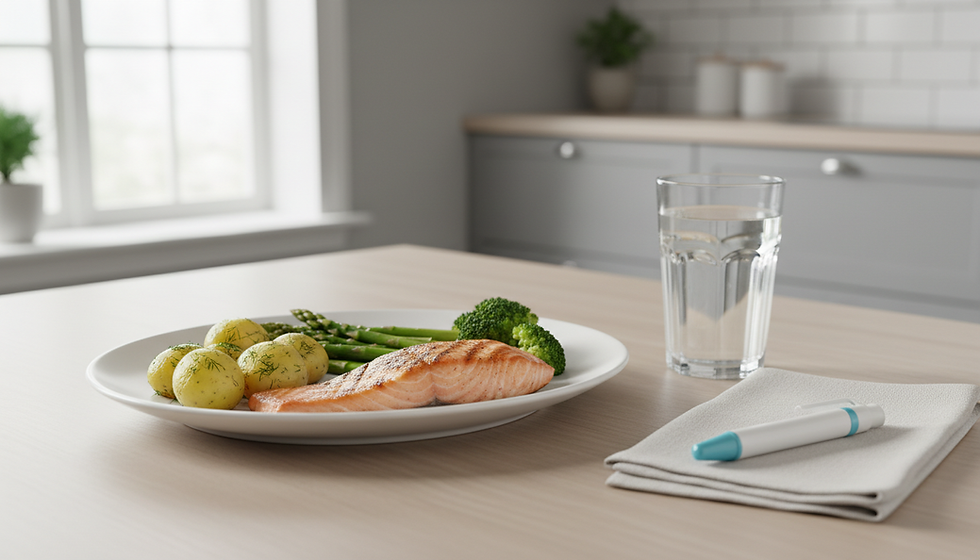
Good options include:
Eggs
Greek yoghurt or skyr
Cottage cheese
Chicken or turkey
Fish
Lean meat
Tofu or tempeh
Beans, lentils and chickpeas
Milk
Fortified soya alternatives
You don't need to eat huge portions. Small amounts throughout the day often feel much more manageable than one large meal.
There isn't one perfect Mounjaro diet. The best approach is one that meets your nutritional needs while fitting your appetite, symptoms and lifestyle.
2. Stay hydrated
Reduced appetite often means people drink less without realising it. This can contribute to headaches, tiredness and constipation.
Aim to drink regularly throughout the day rather than waiting until you feel thirsty. Water is an excellent choice, but tea, coffee, milk and sugar-free drinks also contribute towards your fluid intake.
If you're experiencing vomiting or diarrhoea, it's particularly important to replace lost fluids and seek medical advice if you're unable to keep fluids down.
3. Include fibre, but build it gradually
Fibre is important for digestive health and can help reduce the risk of constipation, which is a common side effect of GLP-1 medications.
Good sources include:
Wholegrains
Fruit
Vegetables
Beans and lentils
Oats
Nuts and seeds
However, if your appetite is low or you're already experiencing bloating or nausea, suddenly increasing your fibre intake may make symptoms worse.
Small, gradual changes are usually better tolerated than trying to transform your diet overnight.
4. Don't forget fruit and vegetables
Fruit and vegetables provide vitamins, minerals and fibre that support your overall health. The aim isn't to chase a perfect target every day.
If eating feels difficult, adding some berries to yoghurt, having a small side salad with lunch or including vegetables in an evening meal all count. Small changes still count.
5. Think little and often
If large meals feel overwhelming, try thinking in terms of eating opportunities rather than traditional meals.
Many people find it easier to manage:
A pot of Greek yoghurt mid-morning.
Half a sandwich at lunch.
A boiled egg with oatcakes.
A small portion of chicken and vegetables in the evening.
Eating little and often may feel much more achievable than trying to finish large meals.
A Dietitian's Perspective
One of the biggest misconceptions I see is people assuming that eating as little as possible will produce the best outcome.
In reality, my focus is very different.
I'm thinking about muscle mass.
Protein intake.
Nutritional adequacy.
Energy levels.
Long-term health.
Weight loss is only one part of the picture.
Enjoyed this article?
I'm creating a free library of evidence-based nutrition resources for people living with digestive symptoms and those taking GLP-1 medications.
Join my newsletter to receive new articles, practical guides and nutrition updates straight to your inbox.
Still unsure what to eat on GLP-1?
If you're struggling with:
✔ eating enough
✔ nausea
✔ constipation
✔ protein intake
✔ meal ideas
✔ maintaining muscle while losing weight
I'd be happy to help.
As a HCPC Registered Dietitian, Lead Specialist NHS Dietitian and PhD Clinical Nutrition Researcher, I provide personalised online consultations across the UK.

Comments